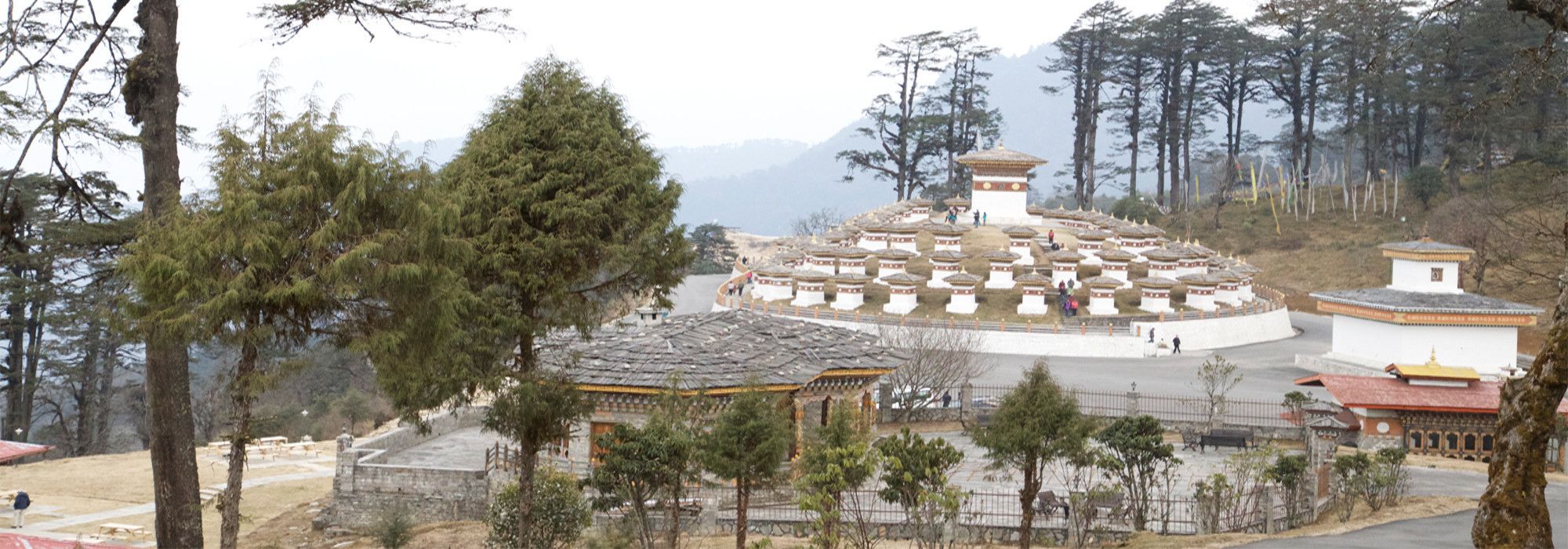
The best time to visit Bhutan: choose by landscape, festival and pace

Bhutan has no single best month. Spring, March to May, gives rhododendron colour, warm valleys and the largest festivals. Autumn, late September to November, gives the clearest mountain views and the most reliable trekking. Winter is cold, quiet, and the only season for cranes in Phobjikha. Summer is green, wet and the least crowded. Choose by what you came to notice.
The four seasons at a glance
Spring, March – May
In the valleys — warm afternoons, cool nights, haze building by May.
Trekking — good; passes open, some snow high.
Festivals — Paro Tshechu, the year’s largest.
Wildlife — rhododendron in flower, birds returning.
Crowds — high in festival weeks.
Summer, June – August
In the valleys — warm and wet; cloud sits on the ridges for days.
Trekking — poor; leeches, mud, obscured views.
Festivals — fewer, and smaller.
Wildlife — everything green; mushrooms, insects, orchids.
Crowds — lowest of the year.
Autumn, late September – November
In the valleys — bright, dry, cold nights.
Trekking — the reliable window.
Festivals — Thimphu Tshechu, Jambay Lhakhang, the Black-Necked Crane Festival.
Wildlife — cranes arrive in Phobjikha from late October.
Crowds — highest of the year.
Winter, December – February
In the valleys — sunny days, hard frosts, nights below freezing at altitude.
Trekking — low routes only; high passes closed.
Festivals — Punakha Drubchen and Tshechu, late in the season.
Wildlife — cranes present in Phobjikha until mid-February.
Crowds — low.
Valley conditions. Add roughly 6°C of drop for every 1,000 metres you climb, and expect a 10–15°C swing between afternoon and dawn in any season.
Who this is for
This is for someone at the very start of planning, without fixed dates, trying to work out which month serves what they actually came for.
Culture-first travellers who want dzongs, valleys and a festival, and can move their dates to catch one.
Trek-first travellers for whom pass conditions and mountain visibility decide the trip.
Wildlife-first travellers, which in Bhutan mostly means the cranes, and which narrows the calendar sharply.
Quiet-first travellers who would trade a clear horizon for empty trails and available rooms.
Who this is not for
Anyone whose dates are already fixed. This article will only tell you what you cannot change. Read it as a description of what your month will be like, not as a decision.
Anyone hoping to combine a high trek with the crane season. Those two windows barely overlap, and the article says so plainly below.
Spring: colour, and the crowd that comes with it
From March the valleys warm quickly. Rhododendron comes into flower along the passes — Dochula and Chele La are the two most people see — and the forest floor changes week by week rather than month by month. Afternoons are comfortable in a shirt; dawn still wants a jacket.
Spring is also when Paro Tshechu happens, and it is worth being clear about what that means practically. Paro has one airport and a limited number of rooms. Festival week does not fill up gradually; it closes. Flights, hotels and guides are all constrained at once, and the constraint arrives months ahead of the dates themselves.
The trade-off is haze. By late April and into May the air thickens and the high peaks retreat behind it. If you have come to see Jhomolhari standing over the valley, spring is the wrong season and no amount of good luck fixes it.
Autumn: the clear window, and the busiest one
Late September through November is the season that earns Bhutan its photographs. The monsoon withdraws, the air dries, and the high peaks come back into view for weeks at a time. Nights get properly cold, days stay bright, and the trails firm up.
This is the trekking season, and not by a small margin. The passes on the Chomolhari routes are reliably crossable, the camps are workable, and the odds of a clear morning at Jangothang are as good as they get. If you are walking anywhere high in Bhutan, this is when.
It is also when everyone else comes. Thimphu Tshechu falls in the autumn, the trekking crews are all working, and the good rooms in Paro and Punakha go early. Autumn is not a quiet season and no operator can make it one.
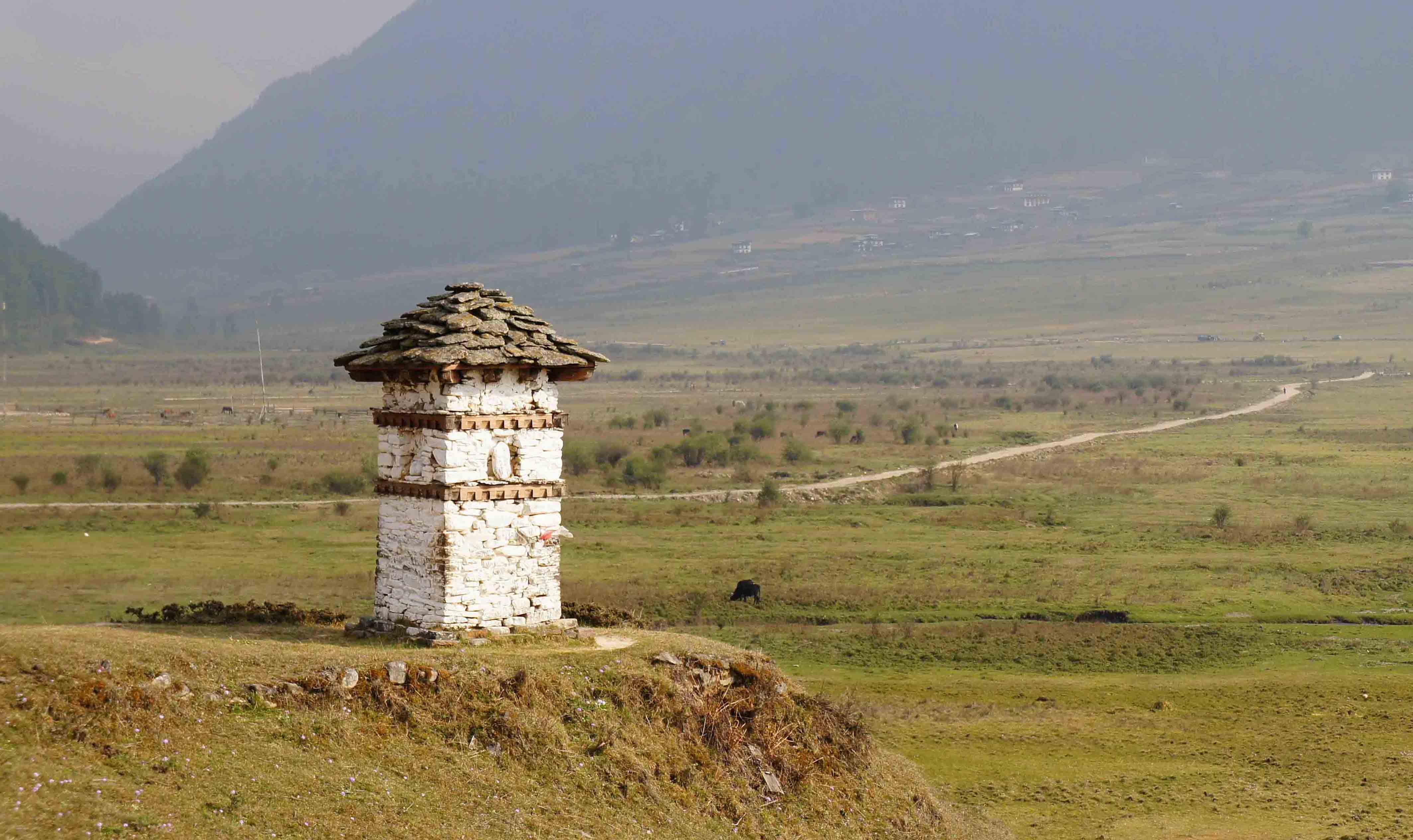
A general film of Bhutan’s valleys and monasteries. It is not tied to a specific month or route, and we are not presenting it as one — it is here for the shape of the country, not the season.
Winter: cold, quiet, and the only season for cranes
Winter in the western valleys is not the ordeal people expect. Days are frequently sunny and still; it is the nights that are hard, dropping below freezing at Phobjikha’s altitude and staying there. The light in December and January is the cleanest of the year, with none of spring’s haze.
What winter has that no other season does is the black-necked cranes. They arrive in Phobjikha from late October and stay until roughly mid-February, wintering on the valley floor after crossing from the Tibetan plateau. The Royal Society for Protection of Nature has monitored and managed that habitat for decades, and the Black-Necked Crane Festival on 11 November each year sits reliably inside the window.
We will not promise you a sighting. They are wild birds on a wide valley floor and some mornings they are simply elsewhere. What we can say is that outside roughly late October to mid-February, there is nothing to see — the birds are not in the country.
[IMAGE SLOT — file: 04 Gangtey-Phobjikha 04.jpg — caption: “Black-necked cranes, Phobjikha. Wintering birds; the valley is empty of them from spring through autumn.” — alt: Black-necked cranes on the Phobjikha valley floor]
What closes in winter is height. The high passes on the Chomolhari routes are not a winter proposition, and we will not run them as one. Low walks, valley culture and the cranes are what the season is for.
Summer monsoon: green, wet, and honest about it
June through August is the season nobody sells, and it deserves a fairer description than it gets. The valleys are as green as they ever are, the rivers are loud, the rooms are available and the dzongs are close to empty. Rain in Bhutan is mostly an afternoon and overnight event rather than an all-day one.
But it should be described as a trade, not a secret. Cloud sits on the ridges, sometimes for days — the mountains you came for may simply not appear. Roads through the passes are vulnerable to landslides, and a closure on the Dochula road reorders a whole itinerary rather than delaying it by an hour. Trekking is genuinely unpleasant: mud, leeches below the treeline, and views that do not arrive.
We do not steer people away from summer. We steer people away from summer treks, which is a different and much more specific piece of advice.
Our judgment — the month we would choose, and who should ignore us. Late October. The monsoon is finished, the air has cleared but the deep cold has not arrived, the cranes are landing in Phobjikha, and the passes are open. It is the one point in the year where the cultural valleys, the high trails and the wildlife are all available at once.
Ignore that if you want a festival — you will be choosing dates, not seasons. Ignore it if you want the country to yourself, because late October is busy. And ignore it if you are travelling with anyone who genuinely dislikes cold nights: it is bright by day and hard by dawn, and pretending otherwise helps nobody.
The month we steer people away from is July, specifically for the Chomolhari routes. Not because it cannot be walked, but because we would be selling you eight days of walking toward a mountain you will not see.
So which month, for what?
Season choice should come before route choice, not after it. Here is the short version, stated as decisions rather than descriptions.
You came to walk high. Late September to mid-November. Nothing else is close. October is the centre of it.
You came for a festival. Spring for Paro, autumn for Thimphu, late winter for Punakha — and book the flights before you book anything else.
You came for the cranes. Late October to mid-February, with November and December the most reliable. This does not combine with a high trek.
You came for the mountains to be visible. Late autumn and early winter. Spring haze and summer cloud will both defeat you.
You came for quiet. June to August, or January and February. Accept what each costs you.
You have one week and no strong priority. Mid-October or late March. Both give you a workable version of most things.
What happens when the weather does not cooperate?
Some of this is worth saying because it is the part that actually differs between operators. Bhutan’s weather does not so much cancel days as reorder them.
What gets reordered: the sequence of valleys. If Dochula is closed, Punakha moves later and Thimphu moves earlier. Same content, different order.
What gets substituted: high walks become valley walks at the same location. You lose the altitude, not the day.
What gets dropped: ambitious optional add-ons at the end of a day. This is the first thing to go and the least missed.
What never moves: acclimatisation nights, and the rest day before a big walk. These exist precisely so that bad weather has somewhere to be absorbed. Compressing them to catch up is how a schedule problem becomes a health problem.
How this changes the journey. Season is why the five routes are not interchangeable. The two Chomolhari routes are autumn propositions and we build them that way. The Heart of Druk reaches Phobjikha and Bumthang, which makes it the route that has something specific to offer in winter. Sacred Valleys works in almost any month, which is why it is the one we suggest when dates are fixed and cannot move.
What we will not do is run a high route out of season and call the weather bad luck. If your dates and your ambitions do not match, we would rather change the route than the expectations. Compare the five journeys to see which ones your month actually supports.
Questions we are actually asked
What is the cheapest time to visit Bhutan?
The Sustainable Development Fee is the same every night of the year, so the government portion does not move. What moves is availability: summer and deep winter have the most open rooms and the least competition for flights, while autumn and festival weeks are the tightest. If flexibility matters more to you than clear mountains, June to August is the easiest season to arrange.
When can I see the black-necked cranes in Phobjikha?
The birds arrive from late October and depart around mid-February, wintering on the Phobjikha valley floor. Outside that window they are not in Bhutan. Sightings are never guaranteed — they are wild birds on a wide valley — but November through January is when they are reliably present.
Is monsoon season worth avoiding entirely?
Not entirely. Summer gives you green valleys, loud rivers, quiet dzongs and good availability, with rain that mostly falls in the afternoon and overnight. What it takes away is mountain views and any sensible prospect of trekking. Avoid summer for a trek; consider it for a cultural journey if you would rather have the valleys to yourself.
What is the best month for the Chomolhari trek?
October, with late September and early November as the shoulders. That is when the passes are reliably open, the camps are workable, and the air is clear enough that the mountain is actually visible from Jangothang. We would not run the route in summer, and the high passes are closed in winter.
How far ahead should I book around a festival?
Further than feels necessary — the constraint is Paro’s airport and room stock, not the festival itself. Both close out months ahead. It is also worth holding your plans a little loosely: tshechu dates follow the lunar calendar and are confirmed by the Central Monastic Body, so a date published far in advance can move.
Can I combine a trek with the crane season?
Barely, and not comfortably. The cranes arrive in late October, which is the tail of the reliable trekking window. By the time the birds are consistently in the valley, the high passes are closing. If you want both, late October is the only realistic overlap and you should expect to compromise on one of them.
Sources
Bhutan Tourism FAQs — seasons — official season guidance, including the autumn and spring windows described above.
Official festival announcements — where tshechu dates are confirmed. The authority for any festival date on this page.
Royal Society for Protection of Nature — the conservation body that monitors the black-necked cranes and manages the Phobjikha habitat. Crane arrival and departure windows are attributed to them, not to us. [LINK TARGET TO CONFIRM before publishing]
Neri field experience — trekking-season judgments, pass conditions and the weather-contingency practice described here are our own operating experience rather than published fact, and are stated as such.
Start a conversation. Tell us the month you are considering and we will tell you what it will actually be like — including when the honest answer is that you have picked the wrong one.
Related Field Notes and next step
The month-by-month Bhutan calendar [NOT PUBLISHED YET — leave as plain text, do not link]
Attending a tshechu [NOT PUBLISHED YET — leave as plain text, do not link]